Introduction
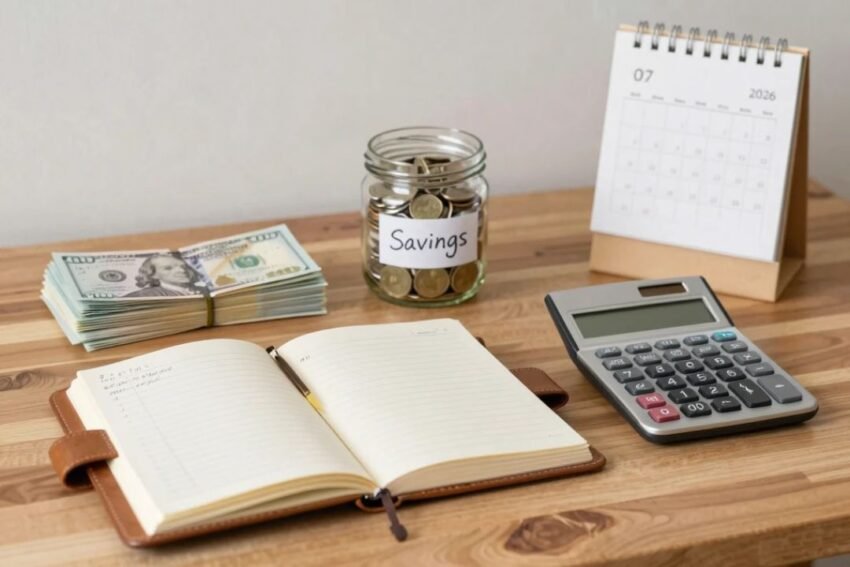
Managing money wisely is one of the most important steps toward financial security. In 2026, households continue to deal with changing prices, housing costs, borrowing rates, subscriptions, transportation expenses, and everyday spending. A practical budgeting and saving plan can help you control expenses, build an emergency fund, reduce financial stress, and prepare for future goals.
Budgeting does not mean avoiding everything you enjoy. Instead, it gives your money a purpose. When you know how much you earn, what you spend, and how much you want to save, it becomes easier to make confident financial decisions.
This guide explains how to create a budget, save money, reduce unnecessary expenses, automate savings, manage debt, and build stronger financial security in 2026.
Note: This article is for general educational purposes and is not personalized financial advice.
What Is Budgeting?
Budgeting is the process of creating a plan for how you will use your income.
A basic budget answers three questions:
- How much money comes in?
- Where does the money go?
- How much can be saved or invested?
A good budget should be realistic rather than overly restrictive.
If your plan is impossible to follow, you are more likely to abandon it.
Why Saving Money Matters
Saving provides financial flexibility.
Savings can help you handle:
- Unexpected expenses
- Car repairs
- Medical costs
- Job interruptions
- Home repairs
- Major purchases
- Travel
- Education
- Future investments
Without savings, an unexpected expense may force you to rely on credit cards or loans.
Start With Your Income
Before creating a budget, calculate your average monthly take-home income.
Include income sources such as:
- Salary
- Freelance work
- Business income
- Commissions
- Side jobs
- Other regular income
If your income changes from month to month, use a conservative estimate rather than assuming your highest monthly income will continue.
List Your Monthly Expenses
Write down all major expenses.
Housing
- Rent
- Mortgage
- Property taxes
- Home insurance
- Maintenance
Transportation
- Car payment
- Fuel
- Insurance
- Repairs
- Parking
- Public transportation
Food
- Groceries
- Restaurants
- Takeout
- Coffee
Utilities
- Electricity
- Water
- Internet
- Phone
Financial Obligations
- Credit cards
- Student loans
- Personal loans
- Other debt
Lifestyle
- Entertainment
- Shopping
- Subscriptions
- Hobbies
- Travel
Once everything is listed, you can identify where your money is actually going.
Try the 50/30/20 Budget
The 50/30/20 budgeting rule is a simple starting framework.
It suggests allocating approximately:
- 50% toward needs
- 30% toward wants
- 20% toward savings and debt repayment
However, these percentages aren’t requirements.
If housing costs are high, you may need to spend more than 50% on necessities.
If your income is limited, saving 20% may not be realistic initially.
Use the framework as a guide rather than a strict rule.
Create a Zero-Based Budget
Another approach is a zero-based budget.
The idea is to assign every dollar of expected income to a specific purpose.
For example:
Income − Planned expenses − Savings − Debt payments = $0
A zero balance does not mean spending everything. Savings and investments are also categories in the plan.
Track Every Expense
Expense tracking is one of the easiest ways to discover unnecessary spending.
Track:
- Daily purchases
- Online orders
- Restaurant meals
- Subscriptions
- Transportation
- Entertainment
You can use a spreadsheet, budgeting app, or simple notebook.
The method matters less than consistency.
Identify Your Money Leaks
Money leaks are small or recurring expenses that may not seem significant individually.
Examples include:
- Unused subscriptions
- Frequent food delivery
- Daily convenience purchases
- Impulse shopping
- Premium services you rarely use
Review your bank statements and identify expenses that provide little value.
Cut Subscriptions You Don’t Use
Subscriptions can become expensive because they are automatically charged.
Review:
- Streaming services
- Fitness memberships
- Software
- Cloud storage
- Gaming services
- News subscriptions
Cancel services you don’t regularly use.
You can also rotate entertainment subscriptions instead of paying for multiple services at the same time.
Reduce Restaurant Spending
Eating out can take a significant portion of a monthly budget.
You don’t have to eliminate restaurants.
Instead:
- Set a monthly restaurant budget
- Cook more meals at home
- Plan meals before shopping
- Use leftovers
- Compare menu prices
- Reduce delivery fees
Even a few fewer restaurant orders each month can create additional savings.
Save Money on Groceries
Grocery costs can often be reduced with planning.
Make a Shopping List
Avoid buying items simply because they look appealing.
Plan Meals
Know what you will cook before visiting the store.
Compare Unit Prices
A larger package isn’t always cheaper.
Reduce Food Waste
Use food before it expires.
Buy Store Brands
Generic products can sometimes provide similar quality at lower prices.
Use the 24-Hour Rule
For nonessential purchases, consider waiting 24 hours before buying.
For expensive purchases, wait even longer.
This gives you time to decide whether you actually need the item.
The strategy can reduce impulse spending.
Create Separate Savings Goals
Instead of putting all savings into one account, consider creating categories for different goals.
Examples include:
- Emergency fund
- Vacation
- Car
- Home
- Education
- Annual bills
Separate goals can make progress easier to track.
Build an Emergency Fund
An emergency fund is money reserved for unexpected expenses.
A common long-term goal is to maintain several months of essential expenses, although the appropriate amount depends on your personal circumstances.
If you are starting from zero, don’t worry about reaching the final target immediately.
Start with a small milestone.
$500 → $1,000 → one month of expenses → several months of expenses
Consistency matters.
Automate Your Savings
Automation is one of the easiest ways to build a savings habit.
Schedule automatic transfers from your checking account to your savings account.
For example:
Paycheck → Checking account → Automatic savings → Remaining spending money
This approach reduces the temptation to spend money that you intended to save.
Save Before You Spend
A useful strategy is to treat savings as a regular financial obligation.
Instead of:
Income → Spending → Whatever is left gets saved
Try:
Income → Savings → Bills → Spending
This is commonly called paying yourself first.
Use High-Yield Savings Carefully
A high-yield savings account may offer a higher interest rate than a traditional savings account.
When comparing accounts, look at:
- APY
- Fees
- Minimum balance
- Withdrawal rules
- Account requirements
- Deposit insurance
Rates can change, so don’t assume today’s rate will remain the same indefinitely.
Build a Separate Emergency Account
Keeping emergency savings separate from everyday spending money can make it easier to avoid accidental spending.
An emergency account should generally be accessible when you genuinely need it.
The goal is financial protection rather than high investment returns.
Reduce High-Interest Debt
High-interest debt can make saving difficult.
Credit-card balances can accumulate substantial interest if they are carried from month to month.
Prioritize understanding:
- Interest rate
- Balance
- Minimum payment
- Fees
- Repayment timeline
Choose a Debt Repayment Method
Two popular methods are the debt snowball and debt avalanche.
Debt Snowball
Pay off the smallest balance first while making required payments on other debts.
This can provide quick psychological wins.
Debt Avalanche
Pay extra toward the debt with the highest interest rate first.
This can reduce interest costs when all other factors are equal.
Choose the method you can consistently follow.
Avoid Lifestyle Inflation
Lifestyle inflation occurs when spending rises as income increases.
For example, someone receives a raise and immediately upgrades:
- Car
- Apartment
- Phone
- Restaurants
- Vacations
Instead, consider dividing additional income between spending and financial goals.
For example:
50% lifestyle + 50% savings/debt/investing
The exact split is up to you.
Save Your Tax Refund
A tax refund can provide an opportunity to strengthen your finances.
Possible uses include:
- Emergency savings
- High-interest debt
- Retirement contributions
- Necessary home repairs
- Essential purchases
Avoid automatically treating a refund as free spending money.
Use Cash-Flow Planning
Budgeting is easier when you consider the timing of income and expenses.
For example, if a large insurance payment is due every six months, divide the expected amount by six and save monthly.
This prevents large annual expenses from becoming financial emergencies.
Create a Sinking Fund
A sinking fund is money saved gradually for a known future expense.
Examples include:
- Car maintenance
- Holiday spending
- Insurance premiums
- School expenses
- Home repairs
- Annual subscriptions
If you expect a $1,200 expense in 12 months:
$1,200 ÷ 12 = $100 per month
Saving monthly can make the expense easier to handle.
Reduce Transportation Costs
Transportation can consume a large portion of a household budget.
Consider:
- Comparing insurance rates
- Maintaining your vehicle
- Combining trips
- Using public transportation when practical
- Carpooling
- Choosing fuel-efficient vehicles
When buying a car, calculate the total cost of ownership rather than focusing only on the monthly payment.
Lower Utility Bills
Simple changes may reduce household expenses.
Consider:
- Adjusting thermostat settings
- Using energy-efficient lighting
- Unplugging unused equipment
- Comparing internet plans
- Reducing unnecessary water use
Savings vary by household.
Shop With a Plan
Before making a purchase, ask:
Do I need this?
Did I budget for it?
Can I find it cheaper?
Will I still want it next month?
These questions can prevent unnecessary purchases.
Compare Prices
Before buying expensive items, compare multiple sellers.
Look at:
- Total price
- Shipping
- Warranty
- Return policy
- Financing cost
The cheapest advertised price isn’t always the cheapest final cost.
Use Credit Cards Responsibly
Credit cards can be convenient, but they should fit into your budget.
Good habits include:
- Paying bills on time
- Tracking balances
- Avoiding unnecessary debt
- Understanding APR
- Reviewing statements
Don’t increase spending simply because you have available credit.
Protect Your Credit Score
Your credit history can affect borrowing opportunities.
Helpful habits include:
- Paying bills on time
- Keeping balances manageable
- Monitoring credit reports
- Limiting unnecessary credit applications
- Correcting inaccurate information
Save While Paying Debt
You don’t always have to choose between saving and debt repayment.
A balanced strategy may involve:
- Building a starter emergency fund
- Making required debt payments
- Paying extra toward high-interest debt
- Continuing retirement contributions when appropriate
The right balance depends on your interest rates and financial situation.
Start Investing After Building a Foundation
Once basic financial needs are under control, investing can become part of a long-term strategy.
Potential investments include:
- Stocks
- Bonds
- ETFs
- Mutual funds
- Retirement accounts
Investments can lose value, so money needed soon may not be appropriate for volatile assets.
Understand Compound Growth
Compound growth allows returns to generate additional returns when earnings remain invested.
For example, a hypothetical $5,000 investment growing at 7% annually would increase over time if the returns were reinvested.
However, actual investment returns vary, and no market return is guaranteed.
Use Retirement Accounts
Retirement accounts can provide valuable tax advantages depending on the account and your circumstances.
Common U.S. options include:
- 401(k)
- Traditional IRA
- Roth IRA
- SEP IRA
- SIMPLE IRA
If an employer provides matching contributions, understand the plan’s matching rules.
Set SMART Financial Goals
A strong financial goal should be:
Specific
Measurable
Achievable
Relevant
Time-bound
Instead of saying:
“I want to save more.”
Try:
“I will save $6,000 for an emergency fund over the next 12 months.”
A specific target makes progress easier to measure.
Use a Monthly Money Review
Set aside 20–30 minutes each month to review your finances.
Check:
- Income
- Expenses
- Savings
- Debt
- Credit
- Investments
- Upcoming expenses
Then identify one improvement for the following month.
Small adjustments can have a significant cumulative effect.
A Simple 2026 Saving Plan
Here’s a straightforward structure:
Step 1: Know Your Numbers
Calculate monthly income and essential expenses.
Step 2: Create a Budget
Give every dollar a purpose.
Step 3: Build Starter Savings
Aim for an initial emergency cushion.
Step 4: Attack High-Interest Debt
Prioritize expensive debt.
Step 5: Automate Savings
Schedule transfers after payday.
Step 6: Create Sinking Funds
Save for predictable annual expenses.
Step 7: Invest for Long-Term Goals
Consider diversified investments appropriate for your risk tolerance and timeline.
Step 8: Review Monthly
Adjust the plan as your financial situation changes.
Common Budgeting Mistakes
Creating an Unrealistic Budget
A budget that leaves no room for normal spending can be difficult to maintain.
Forgetting Irregular Expenses
Annual bills and repairs should be included.
Not Tracking Spending
You cannot improve what you don’t measure.
Relying on Credit for Emergencies
Building emergency savings can reduce dependence on expensive borrowing.
Ignoring Small Expenses
Recurring small expenses can become significant over time.
Giving Up After One Bad Month
A budget isn’t about perfection.
If you overspend, review what happened and restart.
How to Save Money on a Low Income
Saving can be challenging when income is limited.
Start with small amounts.
For example:
$5 per week = about $260 per year
$25 per week = about $1,300 per year
Even small contributions can establish a savings habit.
At the same time, increasing income may be important.
Consider:
- Learning new skills
- Asking for additional hours
- Freelancing
- Part-time work
- Negotiating compensation
- Developing a side business
How Families Can Save Money
Families can create shared financial goals.
Useful strategies include:
- Weekly meal planning
- Bulk purchasing when practical
- Reviewing subscriptions
- Setting spending limits
- Saving for annual expenses
- Teaching children basic money habits
A family budget can also make financial priorities more visible.
How Students Can Budget
Students may have irregular income and high education-related expenses.
A simple student budget can include:
- Tuition
- Housing
- Food
- Transportation
- Books
- Entertainment
- Savings
Students should be especially careful with unnecessary high-interest debt.
How Couples Can Budget
Couples should communicate openly about money.
Discuss:
- Income
- Debt
- Savings
- Spending habits
- Financial goals
- Major purchases
Couples can combine finances, keep them separate, or use a hybrid system.
The most important factor is transparency.
Personal Finance Tools
Technology can simplify budgeting.
Useful tools include:
- Budgeting apps
- Spreadsheets
- Banking alerts
- Automatic transfers
- Investment dashboards
- Credit-monitoring tools
Before using financial applications, review privacy policies and security practices.
Protect Your Savings From Scams
Be careful with offers promising:
- Guaranteed returns
- Instant wealth
- No-risk investments
- Secret trading strategies
- Urgent payment requests
Legitimate investments always involve some level of risk.
Never send money simply because someone creates a sense of urgency.
Frequently Asked Questions
What is the easiest way to start budgeting?
Begin by tracking your income and expenses for one month. Then categorize spending and identify areas that can be reduced.
How much money should I save every month?
There is no universal amount. Start with a sustainable figure and gradually increase it as your financial situation improves.
What should I save for first?
Many people prioritize a starter emergency fund, high-interest debt reduction, and important short-term financial needs before increasing long-term investing.
Is the 50/30/20 rule right for everyone?
No. It is a guideline. Your ideal budget may look different depending on income, housing costs, debt, family size, and financial goals.
How can I stop impulse spending?
Use strategies such as waiting 24 hours before nonessential purchases, removing saved payment details, creating spending limits, and tracking discretionary purchases.
Is saving better than investing?
They serve different purposes. Savings are generally appropriate for emergencies and short-term needs, while investing can be appropriate for longer-term goals but involves market risk.
Conclusion
Budgeting and saving money in 2026 do not require complicated financial systems. The most effective approach is to understand your income, track expenses, create realistic spending limits, automate savings, and consistently work toward financial goals.
Start with the basics: build an emergency fund, control unnecessary spending, manage high-interest debt, and create sinking funds for predictable expenses. Once your financial foundation becomes stronger, consider long-term investing and retirement planning.
Remember that financial progress does not happen overnight. Saving $10, $50, or $100 at a time may seem small, but consistent habits can create meaningful progress over the years.
The key is not perfection. The key is consistency.
By creating a practical budget, saving automatically, reducing unnecessary expenses, and regularly reviewing your finances, you can build greater financial security, flexibility, and confidence in 2026 and beyond.